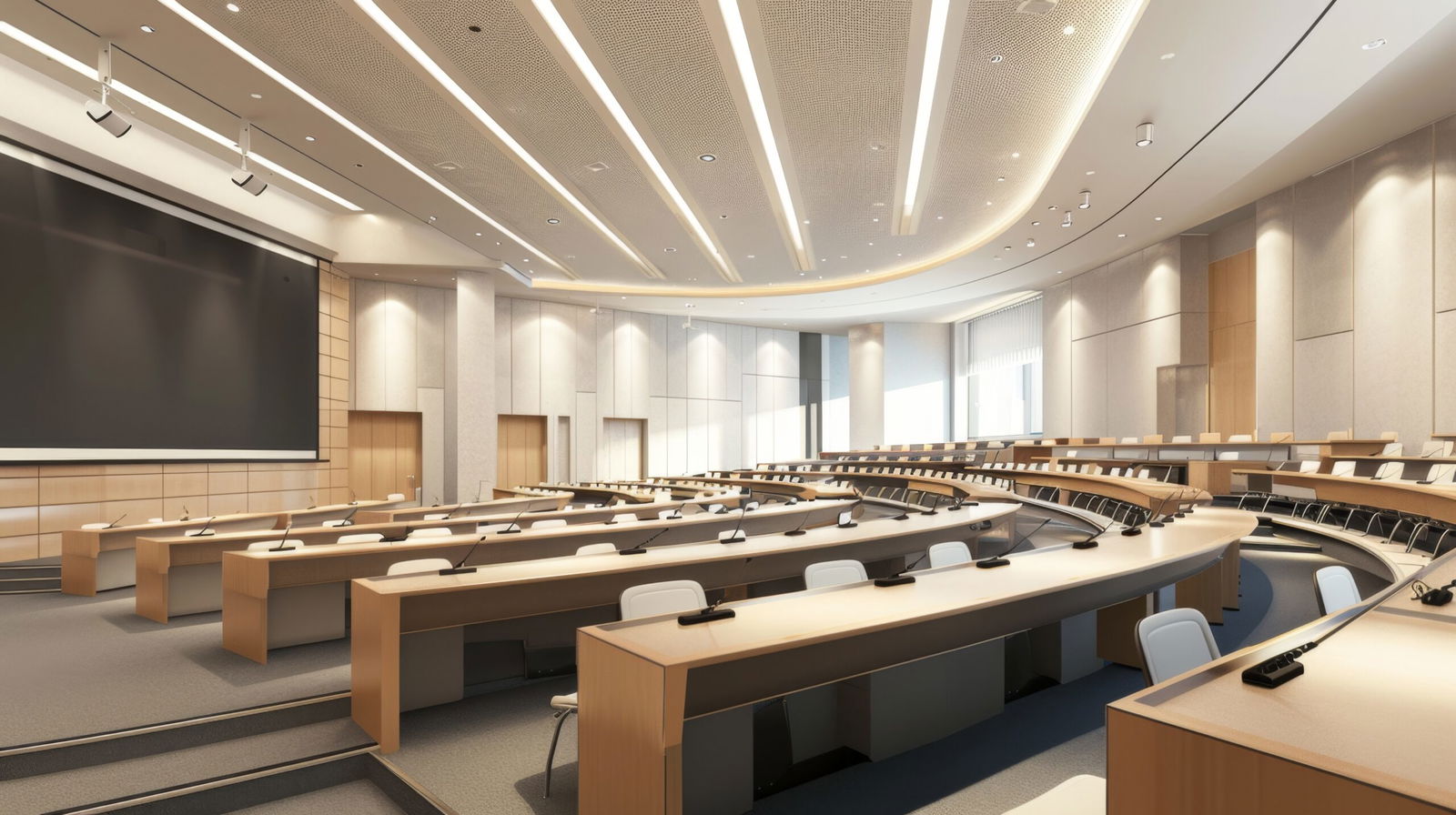
Training rooms must support dynamic presentation formats, hybrid participation, and clear communication for both instructors and attendees. Whether used for employee onboarding, continuing education, compliance training, or technical instruction, these spaces require reliable and adaptable technology systems.
Unlike traditional conference rooms, training environments often involve extended sessions, multiple presenters, content-heavy instruction, and varied seating configurations. Technology must remain intuitive for instructors while delivering consistent performance for in-room and remote participants.
System reliability and workflow simplicity are critical to keeping sessions focused on learning — not troubleshooting.
Strategic Integration Bridge
Effective training environments are built on coordinated infrastructure. Audio reinforcement, wireless presentation systems, conferencing platforms, display routing, and control interfaces must operate as a unified system supported by structured cabling, scalable switching architecture, and properly planned electrical distribution.
Without engineered integration, performance inconsistencies and expansion limitations quickly emerge.
APPLICATION OVERVIEW
Training rooms are designed to facilitate structured learning experiences while accommodating diverse content formats and user needs. These environments typically support:
- Instructor-led presentations
- Hybrid or remote attendees
- Interactive content sharing
- Multi-display viewing
- Recording for future reference
- Flexible seating layouts
These spaces must remain adaptable while maintaining operational simplicity for instructors and support staff.
TYPICAL REQUIREMENTS IN THIS SPACE
- Clear speech reinforcement across the room
- Wireless and wired presentation inputs
- Hybrid conferencing integration
- Multi-display or confidence monitor setups
- Simplified instructor control interface
- Recording capability for replay or archive
- Reliable wired and wireless network connectivity
- Scalable infrastructure for future expansion
COMMON TECHNOLOGY NEEDS
Audio Systems
Distributed reinforcement ensures clear intelligibility throughout the space, especially in larger or deeper rooms. Microphone selection and DSP tuning are critical for consistent speech clarity.
Video & Display Systems
Large-format displays or projection systems provide visibility from all seating positions. Multi-display configurations may support content mirroring or separate confidence monitoring.
Conferencing & Collaboration
Integrated conferencing platforms allow remote participants to engage fully. Proper camera positioning and microphone coverage are essential for hybrid learning success.
Control & Instructor Simplicity
Centralized control interfaces allow instructors to power systems, select sources, adjust audio, and initiate recording without technical complexity.
Infrastructure & Network Backbone
Structured cabling, properly sized switching architecture, PoE planning, and rack organization ensure long-term reliability and scalability.
DESIGN CONSIDERATIONS
Training environments must balance performance, flexibility, and long-term maintainability. System design should account for:
- Room size and seating configuration
- Acoustic characteristics
- Instructor workflow
- Future technology upgrades
- Cable management and rack accessibility
- Network capacity for simultaneous device usage
A well-designed training room system prioritizes clarity, adaptability, and ease of use while maintaining infrastructure integrity behind the scenes.


Our Solutions
Our Case Studies
-

High-Performance Training & Hybrid Collaboration Environment
Integrated AV, dual-display presentation, and one-touch control designed to support scalable training, hybrid meetings, and seamless content delivery.
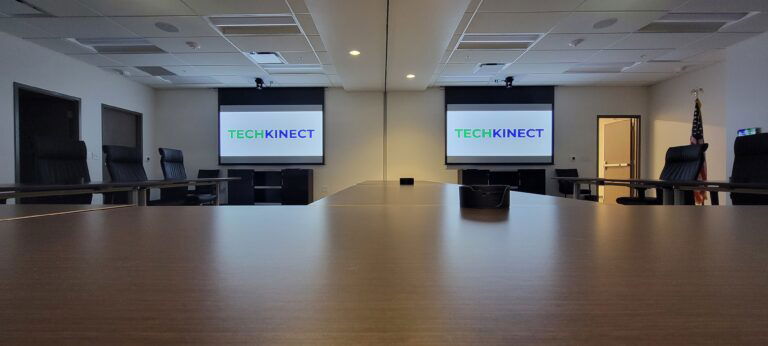
Techkinect designed and implemented a fully integrated AV system for Bridgestream’s training room, supporting instructor-led sessions and hybrid collaboration. The space features dual-display projection, beamforming audio, PTZ cameras, and a custom touchscreen control interface for simple one-touch operation. The result is a scalable, easy-to-use environment that improves communication, enhances engagement, and delivers reliable performance for daily training and company-wide meetings.
-
Caucus Room AV & Recording System
From Complexity to Clarity: A Fully Integrated AV & Recording System for Municipal Operations
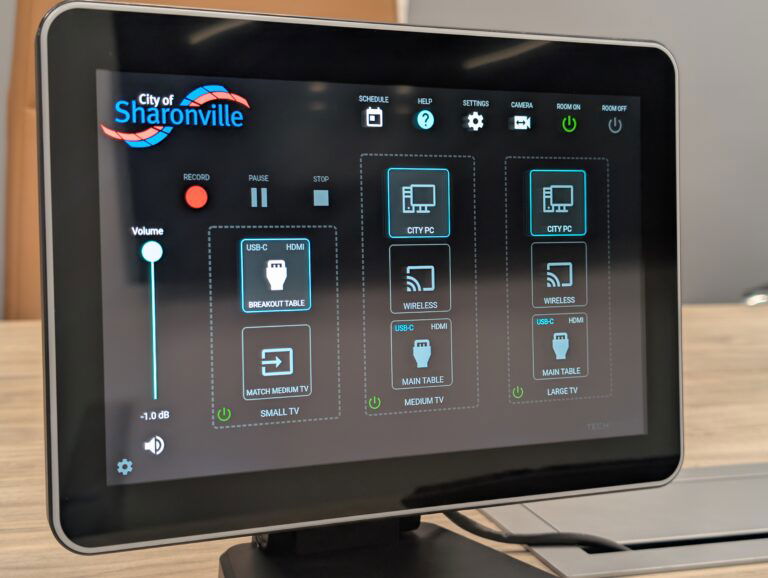
Techkinect partnered with the City of Sharonville to deliver a fully integrated AV and recording system for their caucus room. Starting from a blank space, we implemented a design-build solution combining audio, video, control, and recording into one streamlined system. A custom touchscreen interface provides simple one-touch control, while integrated recording ensures meetings are consistently captured. The result is a reliable, easy-to-use environment that improves meeting performance and day-to-day usability.
-

Flexible AV System for Divisible Training & Conference Environments
Custom AV control, modular table connectivity, and seamless room combining deliver a scalable, high-performance collaboration space.
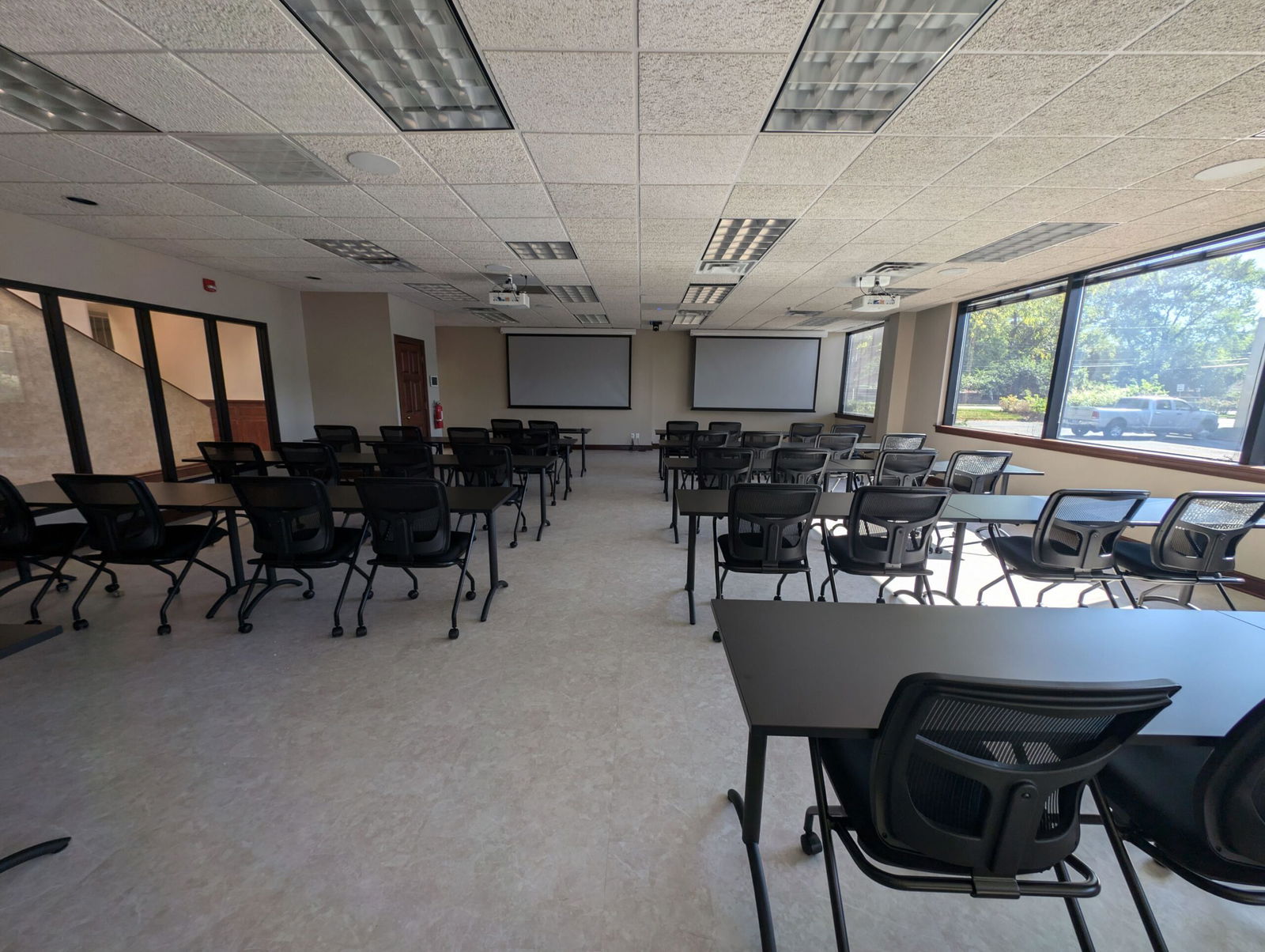
Techkinect designed and implemented a fully integrated AV system for MTSI featuring a two-way divisible training and conference space. The system includes custom control, modular table inputs (wireless, HDMI, and USB-C), ceiling microphones, and recessed projection screens. Users can instantly combine or split the rooms with one-touch control. Additional huddle and conference rooms with conferencing capabilities provide a complete, flexible collaboration environment.
Planning a new training space or modernizing an existing room?
We can evaluate your facility and design a scalable, instructor-friendly training environment aligned with your operational goals and budget.