
AV-over-IP and Networked AV solutions distribute audio and video signals across standard network infrastructure rather than traditional point-to-point cabling. This architecture allows content to be routed, scaled, and managed dynamically across multiple displays, rooms, or facilities.
Unlike legacy matrix systems with fixed input/output limitations, networked AV platforms use managed switching architecture to deliver flexible signal distribution, centralized management, and long-term scalability.
When properly engineered, AV-over-IP systems provide powerful routing capability while reducing cabling complexity and increasing expansion flexibility.
Operational Impact
Well-designed networked AV environments:
- Enable flexible routing of sources to any display
- Support scalable multi-room distribution
- Simplify system expansion
- Improve centralized management
- Reduce physical matrix limitations
- Support hybrid collaboration and streaming
Improperly engineered systems can create network congestion, latency issues, multicast instability, and difficult troubleshooting — especially when deployed without proper switching architecture and segmentation.
Core Components
AV-over-IP systems typically include:
- Network-based AV encoders and decoders
- Managed switching infrastructure
- Fiber backbone where required
- Centralized control platforms
- DSP integration for networked audio
- VLAN segmentation and multicast configuration
- Rack-mounted equipment organization
System performance depends heavily on network design and configuration.
Infrastructure Requirements
Networked AV solutions require properly engineered infrastructure, including:
- Managed Layer 2/Layer 3 switching architecture
- VLAN segmentation and multicast routing configuration
- Adequate switching backplane capacity
- PoE planning for endpoints where applicable
- Structured Cat6/Cat6A or fiber backbone cabling
- Clean rack design and airflow planning
- Dedicated electrical circuits for IDFs and MDFs
Network stability is critical. AV traffic must be designed into the switching environment — not layered onto an undersized network.
Scalability & Integration
AV-over-IP platforms integrate seamlessly with:
- Video walls and multi-display environments
- Divisible meeting rooms
- Large assembly venues
- Hybrid conferencing systems
- Centralized monitoring platforms
- Enterprise network environments
Because the system is network-based, new endpoints can be added without replacing core routing infrastructure — supporting long-term growth.
Ideal Environments
AV-over-IP solutions are commonly deployed in:
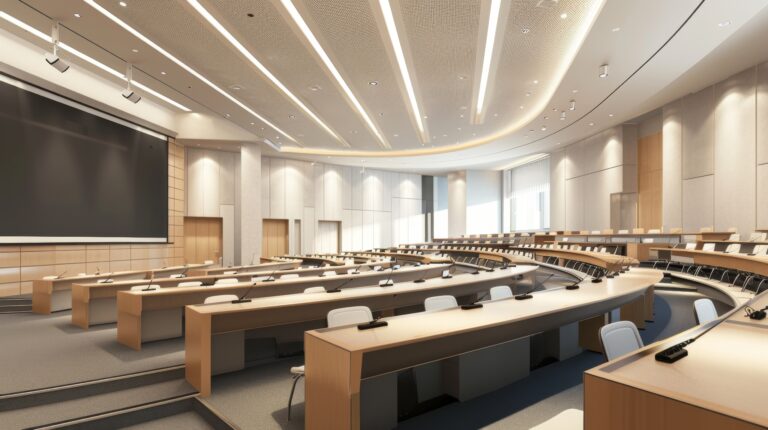
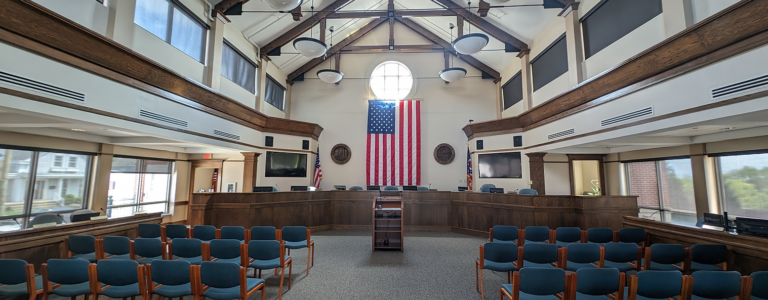
- Council chambers
- Emergency Operations Centers
- Corporate conference centers
- Divisible meeting rooms
- Auditoriums
- Training facilities
- Command centers
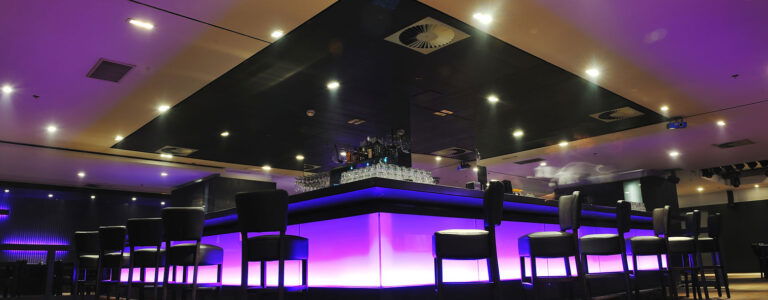
- Multi-room hospitality environments
Our Applications




Our Case Studies
-

Flexible AV System for Divisible Training & Conference Environments
Custom AV control, modular table connectivity, and seamless room combining deliver a scalable, high-performance collaboration space.
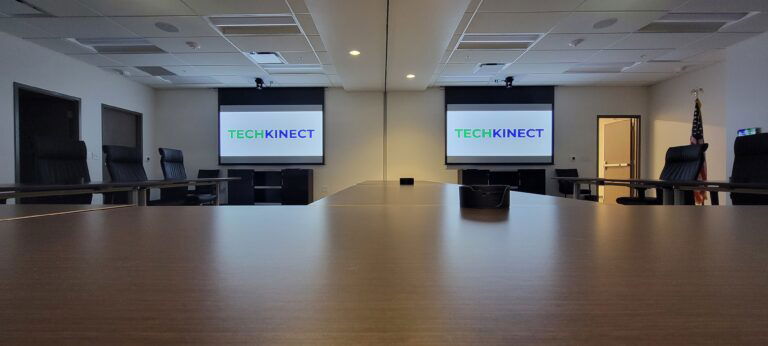
Techkinect designed and implemented a fully integrated AV system for MTSI featuring a two-way divisible training and conference space. The system includes custom control, modular table inputs (wireless, HDMI, and USB-C), ceiling microphones, and recessed projection screens. Users can instantly combine or split the rooms with one-touch control. Additional huddle and conference rooms with conferencing capabilities provide a complete, flexible collaboration environment.
-

Caucus Room AV & Recording System
From Complexity to Clarity: A Fully Integrated AV & Recording System for Municipal Operations
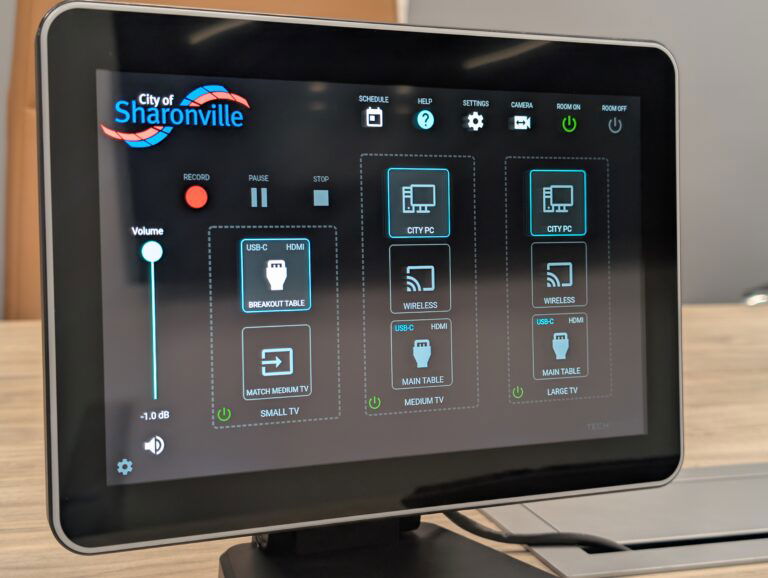
Techkinect partnered with the City of Sharonville to deliver a fully integrated AV and recording system for their caucus room. Starting from a blank space, we implemented a design-build solution combining audio, video, control, and recording into one streamlined system. A custom touchscreen interface provides simple one-touch control, while integrated recording ensures meetings are consistently captured. The result is a reliable, easy-to-use environment that improves meeting performance and day-to-day usability.





Evaluating a scalable video distribution system or replacing legacy matrix hardware?
We can assess your network environment and design an AV-over-IP architecture aligned with performance requirements, scalability goals, and long-term infrastructure strategy.