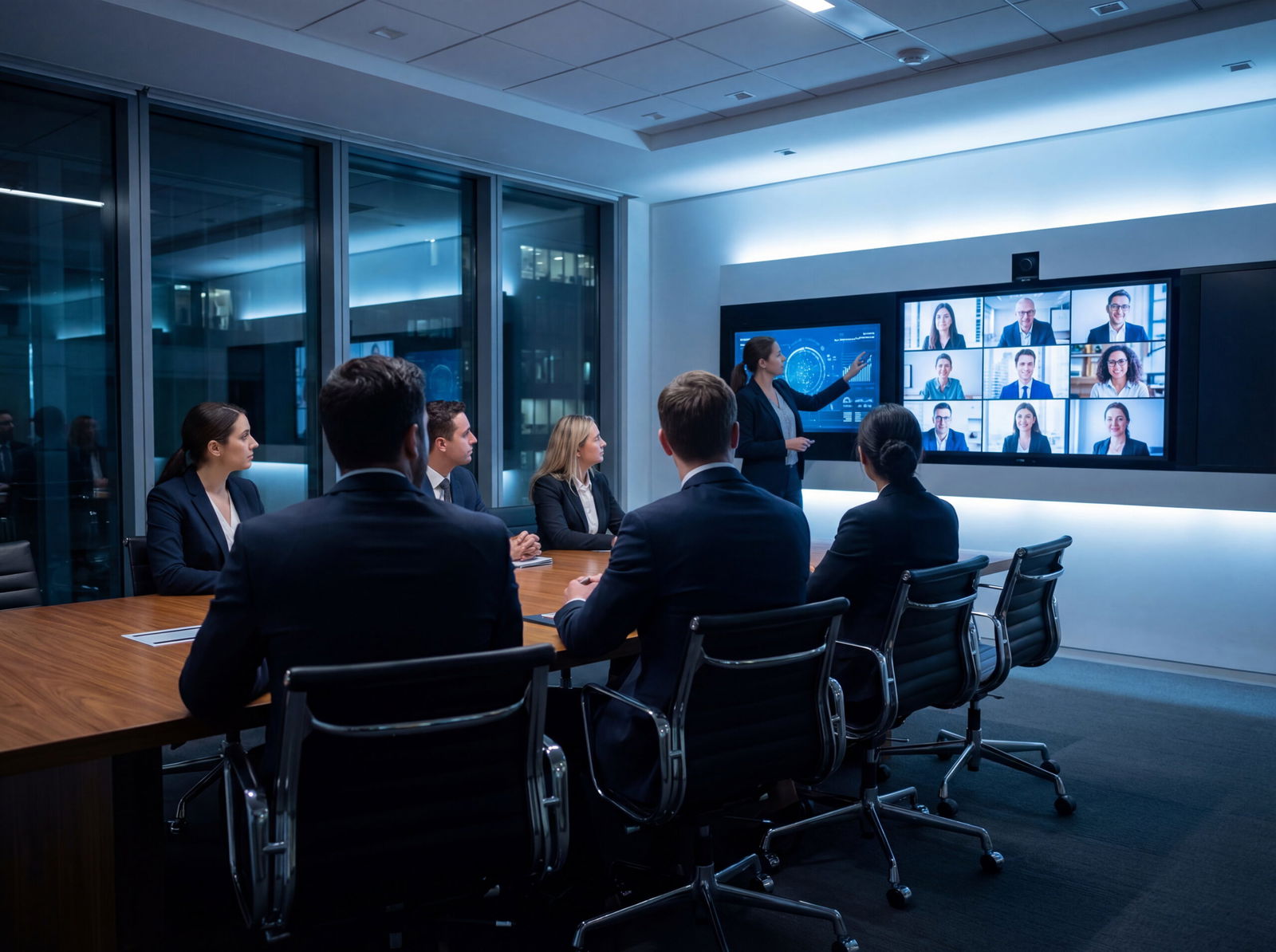
Hybrid Meetings & Collaboration Solutions enable seamless communication between in-room participants and remote attendees. These systems integrate professional audio capture, intelligent camera positioning, display systems, and conferencing platforms into a unified environment designed for clear and consistent interaction.
Modern collaboration environments must support evolving platforms, flexible room configurations, and reliable performance without requiring technical oversight during every meeting.
When properly engineered, hybrid systems provide equal engagement for in-person and remote participants while simplifying room operation.
Operational Impact
Well-designed hybrid collaboration systems:
- Improve audio clarity for remote participants
- Provide natural camera framing and tracking
- Simplify meeting startup and platform integration
- Support multiple conferencing platforms
- Reduce IT support calls
- Improve user adoption and meeting efficiency
Improperly designed systems often result in poor microphone coverage, awkward camera angles, inconsistent audio levels, and user frustration.
Core Components
Hybrid collaboration solutions typically include:
- Beamforming or ceiling microphone systems
- PTZ or auto-framing conferencing cameras
- Large-format displays or dual-display configurations
- Integrated conferencing codecs or soft-client systems
- DSP processing for echo cancellation
- Wireless and wired presentation inputs
- Centralized room control interfaces
System architecture is tailored to room size, seating layout, and collaboration platform requirements.
Infrastructure Requirements
Reliable hybrid environments depend on:
- Structured low-voltage cabling
- Adequate network bandwidth and switching capacity
- VLAN segmentation for conferencing traffic
- PoE planning for cameras and microphones
- Clean rack organization
- Dedicated electrical circuits for AV equipment
- Acoustic consideration during system design
Network performance and proper signal processing are critical to maintaining consistent meeting quality.
Scalability & Integration
Hybrid collaboration platforms integrate with:
- AV control and automation systems
- AV-over-IP distribution platforms
- Distributed audio systems
- Campus connectivity backbones
- Lighting control for video optimization
- Enterprise network infrastructure
Scalable design allows additional rooms to be standardized across facilities for consistent user experience.
Ideal Environments
Hybrid collaboration solutions are commonly deployed in:
- Conference and board rooms
- Training rooms
- Divisible meeting spaces
- Administrative offices
- Corporate campuses
- Municipal facilities
- Educational environments
Our Case Studies
-

Flexible AV System for Divisible Training & Conference Environments
Custom AV control, modular table connectivity, and seamless room combining deliver a scalable, high-performance collaboration space.
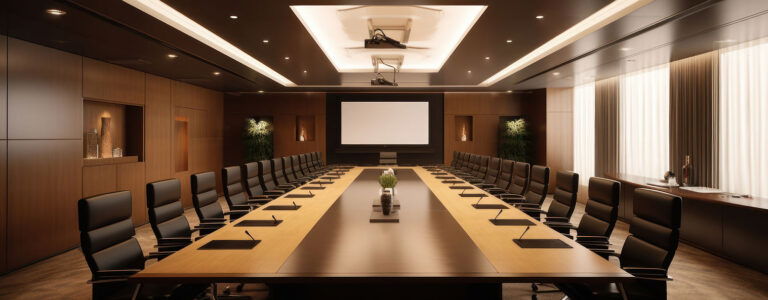
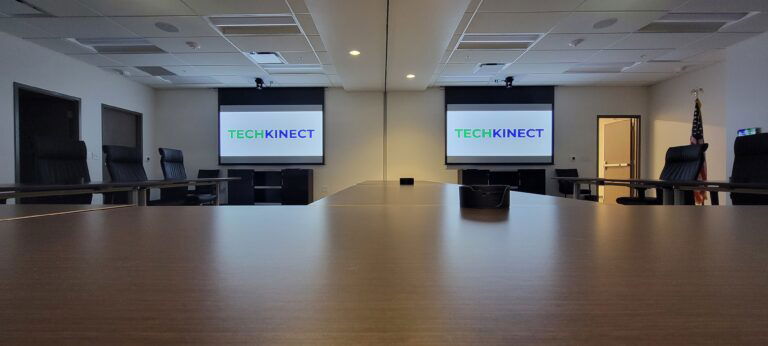
Techkinect designed and implemented a fully integrated AV system for MTSI featuring a two-way divisible training and conference space. The system includes custom control, modular table inputs (wireless, HDMI, and USB-C), ceiling microphones, and recessed projection screens. Users can instantly combine or split the rooms with one-touch control. Additional huddle and conference rooms with conferencing capabilities provide a complete, flexible collaboration environment.
-

Enterprise Network Infrastructure & Access Control Deployment
Large-scale structured cabling, fiber backbone, and integrated access control systems designed for performance, security, and scalability.
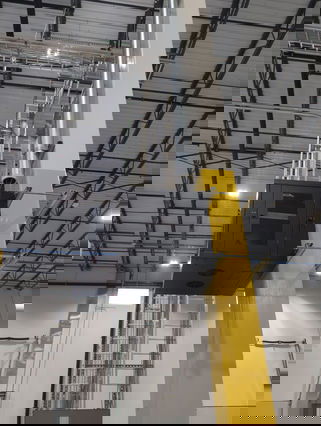
Techkinect deployed a large-scale network and access control infrastructure for a Mattr facility, including 250+ Cat6 drops, fiber backbone, cameras, access points, and full access control system installation. The project required coordination with multiple contractors and involved correcting incomplete prior work. The result is a robust, scalable foundation supporting network performance, security systems, and future expansion across the facility.
-

Caucus Room AV & Recording System
From Complexity to Clarity: A Fully Integrated AV & Recording System for Municipal Operations
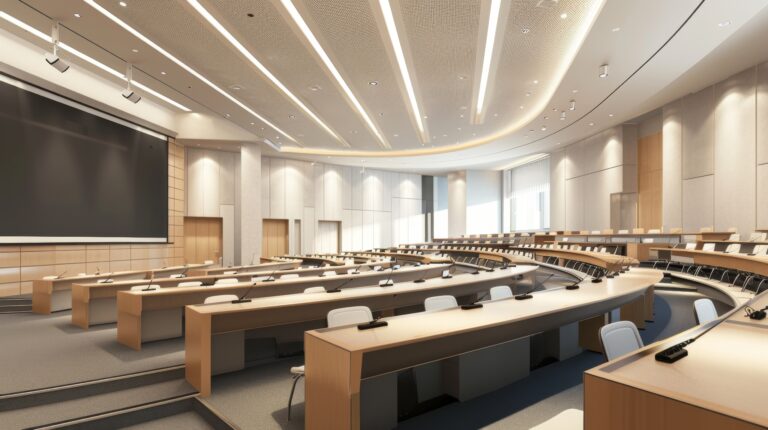
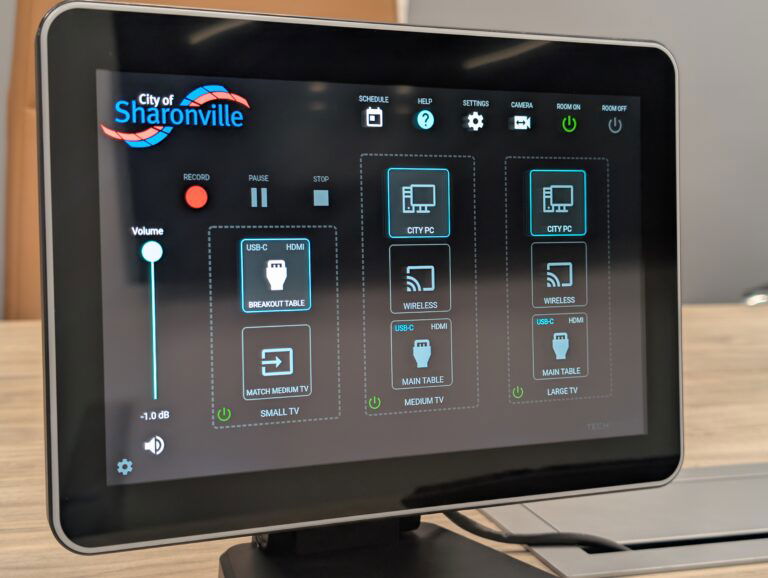
Techkinect partnered with the City of Sharonville to deliver a fully integrated AV and recording system for their caucus room. Starting from a blank space, we implemented a design-build solution combining audio, video, control, and recording into one streamlined system. A custom touchscreen interface provides simple one-touch control, while integrated recording ensures meetings are consistently captured. The result is a reliable, easy-to-use environment that improves meeting performance and day-to-day usability.


Planning to modernize meeting spaces or standardize hybrid collaboration across your facility?
We can evaluate your current environment and design a scalable, infrastructure-aligned collaboration solution tailored to your operational workflow.