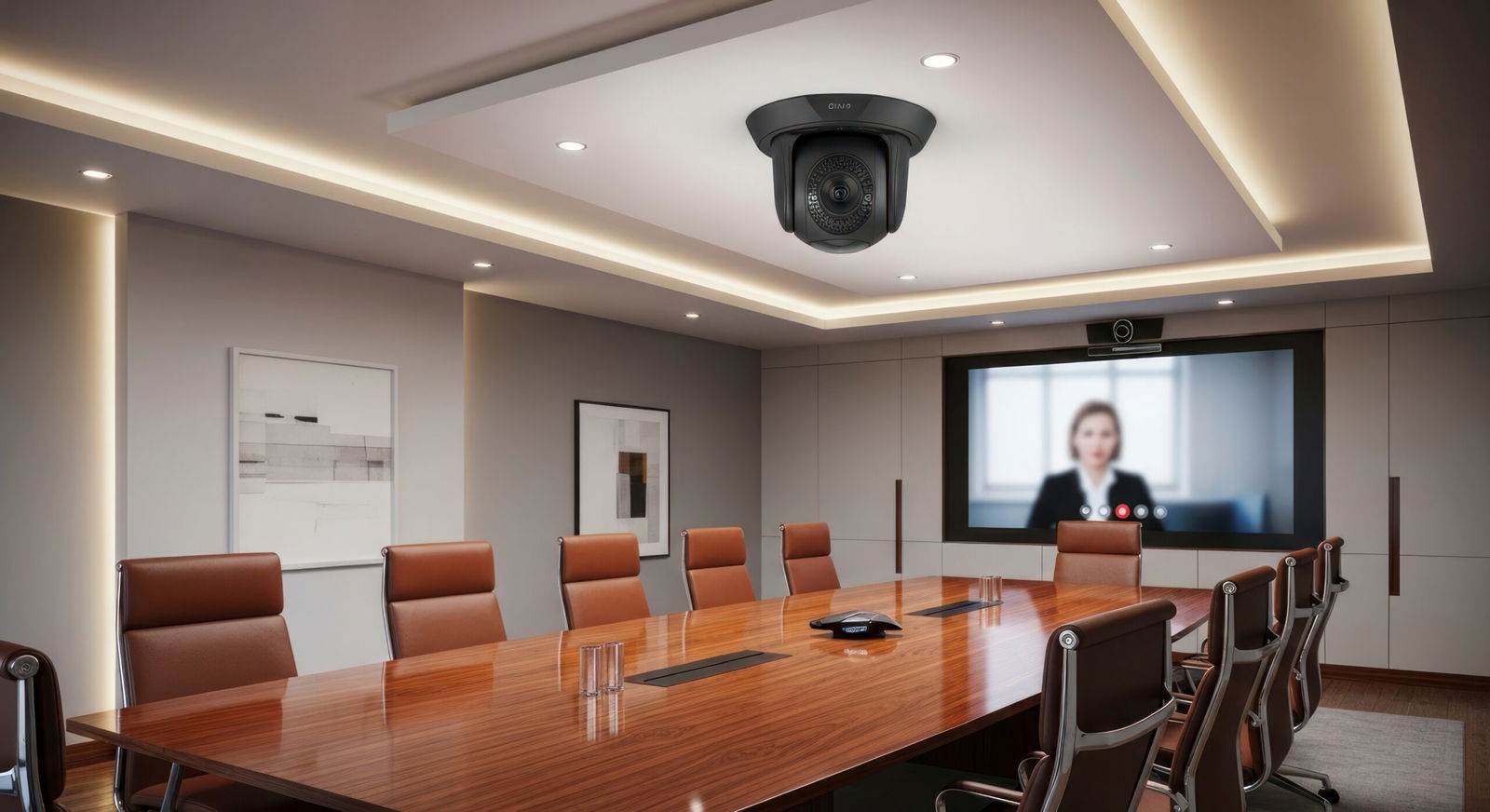
Unified Communications & Conferencing solutions integrate voice, video, messaging, and collaboration platforms into a standardized, enterprise-ready communication environment. Rather than operating isolated conferencing systems or inconsistent room technology, unified communication architecture aligns in-room systems with organization-wide collaboration platforms.
Modern facilities require seamless interoperability between physical meeting spaces, remote users, and cloud-based collaboration tools.
When properly engineered, unified communications environments provide consistent user experience, simplified management, and scalable deployment across multiple rooms or campuses.
Operational Impact
Well-designed unified communication systems:
- Standardize conferencing platforms across facilities
- Improve meeting startup speed and user adoption
- Support voice, video, and messaging integration
- Reduce IT complexity through centralized management
- Enable consistent room design standards
- Improve remote participant engagement
Fragmented communication environments often result in inconsistent user experience, device compatibility issues, and increased support burden.
Core Components
Unified communications and conferencing solutions typically include:
- Integrated room systems and conferencing codecs
- Enterprise voice integration (VoIP platforms)
- Cloud-based collaboration platform alignment
- Centralized device management portals
- Audio DSP and echo cancellation systems
- Intelligent camera and microphone integration
- Secure network and identity management coordination
System architecture is aligned with enterprise platform standards and operational workflows.
Infrastructure Requirements
Reliable unified communication environments depend on:
- Adequate network bandwidth and QoS configuration
- VLAN segmentation for voice and video traffic
- PoE-capable switching infrastructure
- Secure firewall and remote access configuration
- Structured cabling and clean rack organization
- Dedicated electrical circuits for AV equipment
- Integration with network monitoring platforms
Performance stability requires coordination between AV design and core network architecture.
Scalability & Integration
Unified communication systems integrate directly with:
- Hybrid Meetings & Collaboration Solutions
- AV Control & Room Automation
- Room Scheduling & Occupancy Management
- Network Security Foundations
- Campus & Multi-Building Connectivity
- Technology Support & Managed Services
Scalable architecture allows additional rooms, departments, or buildings to be standardized under a centralized communication strategy.
Ideal Environments
Unified communications and conferencing solutions are commonly deployed in:
- Corporate offices
- Municipal facilities
- Educational campuses
- Administrative buildings
- Healthcare environments
- Multi-tenant commercial properties
- Multi-building campuses


Our Case Studies
-

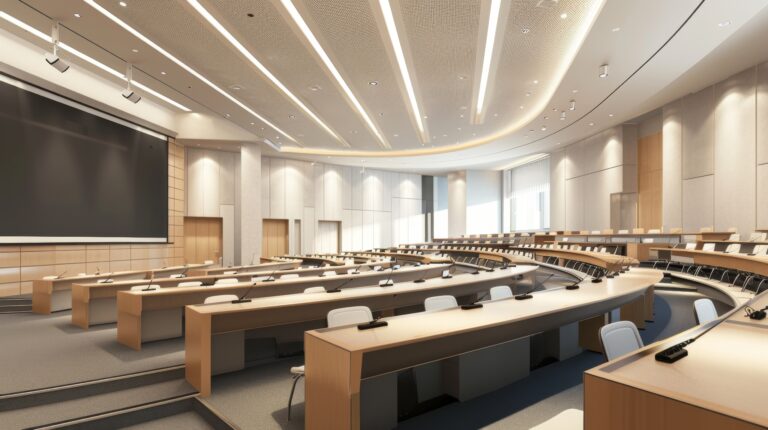
Flexible AV System for Divisible Training & Conference Environments
Custom AV control, modular table connectivity, and seamless room combining deliver a scalable, high-performance collaboration space.
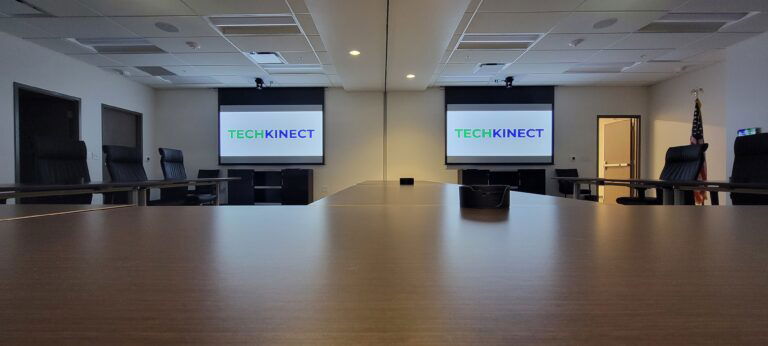
Techkinect designed and implemented a fully integrated AV system for MTSI featuring a two-way divisible training and conference space. The system includes custom control, modular table inputs (wireless, HDMI, and USB-C), ceiling microphones, and recessed projection screens. Users can instantly combine or split the rooms with one-touch control. Additional huddle and conference rooms with conferencing capabilities provide a complete, flexible collaboration environment.
-

Enterprise Network Infrastructure & Access Control Deployment
Large-scale structured cabling, fiber backbone, and integrated access control systems designed for performance, security, and scalability.
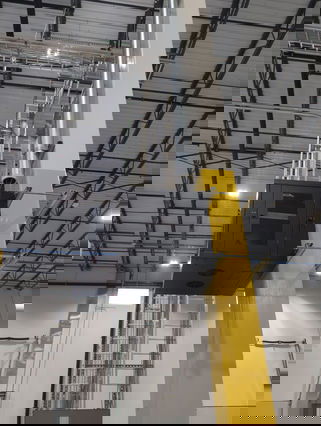
Techkinect deployed a large-scale network and access control infrastructure for a Mattr facility, including 250+ Cat6 drops, fiber backbone, cameras, access points, and full access control system installation. The project required coordination with multiple contractors and involved correcting incomplete prior work. The result is a robust, scalable foundation supporting network performance, security systems, and future expansion across the facility.
-

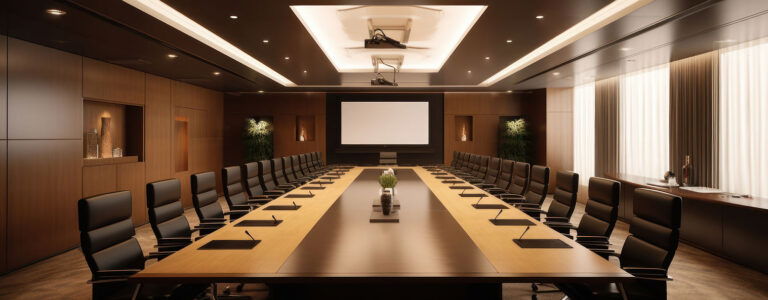
Caucus Room AV & Recording System
From Complexity to Clarity: A Fully Integrated AV & Recording System for Municipal Operations
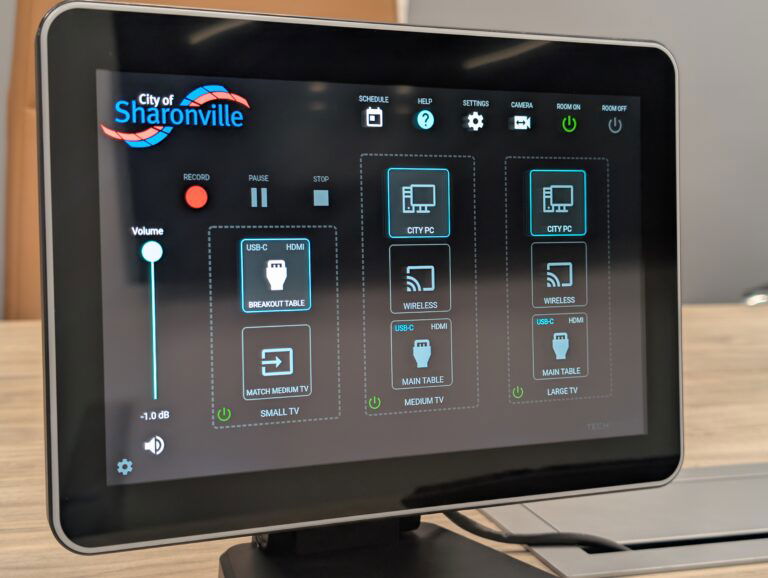
Techkinect partnered with the City of Sharonville to deliver a fully integrated AV and recording system for their caucus room. Starting from a blank space, we implemented a design-build solution combining audio, video, control, and recording into one streamlined system. A custom touchscreen interface provides simple one-touch control, while integrated recording ensures meetings are consistently captured. The result is a reliable, easy-to-use environment that improves meeting performance and day-to-day usability.

Standardizing communication platforms across your organization?
We can evaluate your existing conferencing environment and design a unified communication strategy aligned with enterprise standards, infrastructure performance, and long-term scalability.