
Wireless Network Infrastructure provides secure, high-performance connectivity for mobile devices, collaboration platforms, security systems, and operational technology across facilities and campuses.
Modern environments require more than basic Wi-Fi coverage. Proper wireless design must account for device density, bandwidth demand, roaming performance, and network segmentation. Access points must be strategically placed, properly powered, and aligned with core switching architecture.
When engineered correctly, wireless infrastructure delivers reliable connectivity, seamless mobility, and scalable performance.
Operational Impact
Well-designed wireless infrastructure:
- Improves coverage and signal consistency
- Supports high device density environments
- Enables stable roaming across buildings
- Reduces dropped connections and performance bottlenecks
- Segments guest and internal traffic securely
- Supports AV-over-IP, collaboration, and IoT platforms
Poorly designed wireless networks often result in dead zones, congestion, inconsistent speeds, and security vulnerabilities.
Core Components
Wireless infrastructure solutions typically include:
- Enterprise-grade wireless access points
- Wireless controller or cloud-managed platforms
- PoE-capable switching infrastructure
- VLAN and SSID segmentation
- Secure authentication and guest portal configuration
- RF site survey and heat mapping
- Structured cabling to access point locations
System architecture is based on square footage, occupancy density, and performance requirements.
Infrastructure Requirements
Reliable wireless performance depends on:
- Proper RF planning and interference mitigation
- Adequate PoE budget from edge switches
- Layer 2/Layer 3 switching architecture
- VLAN segmentation and firewall coordination
- Structured cabling and pathway planning
- Dedicated electrical capacity for IDF environments
- Network monitoring integration
Wireless stability is directly tied to backbone capacity and switching performance.
Scalability & Integration
Wireless infrastructure integrates directly with:
- Network Security Foundations
- Network Upgrades & Modernization
- AV-over-IP platforms
- Video surveillance systems
- Room Scheduling & Occupancy Management
- Campus & Multi-Building Connectivity
- Technology Support & Managed Services
Scalable design allows additional access points, buildings, or outdoor coverage zones to be integrated without redesigning the core network.
Ideal Environments
Wireless network infrastructure is commonly deployed in:
- Municipal facilities
- Educational campuses
- Industrial and warehouse environments
- Corporate offices
- Hospitality properties
- Healthcare environments
- Multi-tenant commercial properties
- Multi-building campuses


Our Case Studies
-

Enterprise Network Infrastructure & Access Control Deployment
Large-scale structured cabling, fiber backbone, and integrated access control systems designed for performance, security, and scalability.
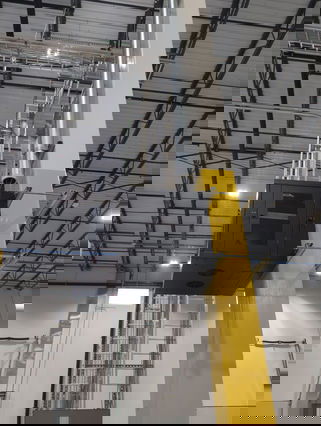
Techkinect deployed a large-scale network and access control infrastructure for a Mattr facility, including 250+ Cat6 drops, fiber backbone, cameras, access points, and full access control system installation. The project required coordination with multiple contractors and involved correcting incomplete prior work. The result is a robust, scalable foundation supporting network performance, security systems, and future expansion across the facility.


Experiencing inconsistent Wi-Fi performance or planning a facility expansion?
We can evaluate your existing wireless environment and design a scalable, infrastructure-aligned wireless network solution tailored to your coverage and performance goals.